Most businesses outgrow their spreadsheets long before they’re ready to commission software.
There’s an awkward middle stage a lot of growing businesses reach. The off-the-shelf software almost fits, but not quite, so it gets propped up with workarounds. The spreadsheet that ran things beautifully for two years has become a fragile thing only one person fully understands. And the obvious answer, a proper custom system, sounds like a year-long project with a price to match.
So most businesses stay put. They add another tab, another manual step, another “just send it to me and I’ll sort it”. The process holds, but it’s held together by people, and it gets heavier to carry every month.
The thing worth knowing is that the gap between “spreadsheet” and “full software project” is no longer as wide as it used to be. A lot of what businesses actually need can be built in weeks, not quarters, without the enterprise price tag attached.
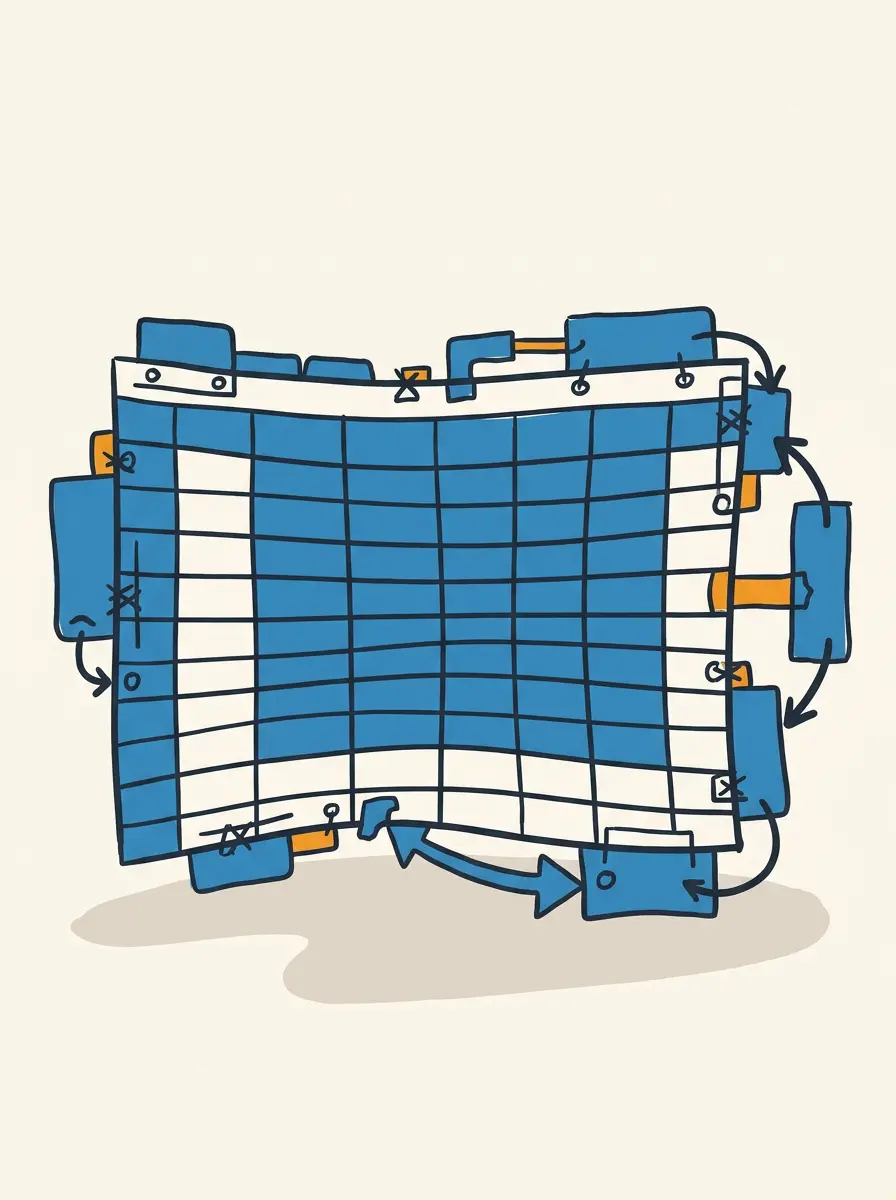
Low-code or full custom: which one your situation calls for
Most decisions about building software come down to one question: how unusual is what you’re trying to do? The more your need looks like a known shape (an internal tool, a customer portal, an approval flow, a dashboard) the more sense it makes to build it on low-code foundations, where a lot of the plumbing already exists. The more your need is genuinely novel (a customer-facing product, a complex mobile app, something that has to scale hard) the more it calls for a full custom build.
Low-code is the right call when…
Speed and cost matter and the requirement is a business process, not a product. It suits internal apps, portals, and the tools that sit around the systems you already run. It’s quicker to build, easier to change later, and it doesn’t lock you into a long project before you’ve seen anything working.
For low-code work on the Microsoft stack, hirevolution builds with the Power Platform, and Jon holds the Microsoft certification for it.
Full custom is the right call when…
You’re building a product rather than a process: a customer-facing web or mobile application, something with demanding performance or scale, something that is the business rather than a tool the business uses. It costs more and takes longer, and for the right thing it’s worth every penny.
Placing yourself
A useful rule of thumb: if you’re describing a better way to run something you already do, that’s usually low-code. If you’re describing something you’d sell or put in front of your own customers, that’s usually full custom. Most businesses are firmly in the first camp and surprised by how much is within reach.
What hirevolution builds
- Weeks not quarters
- One accountable team
- Built to be changed
On the low-code side, hirevolution builds the tools that make a business run more smoothly: internal apps, customer and partner portals, approval and quote workflows, client-onboarding flows, and reporting dashboards. These are the systems that usually start life as a spreadsheet and a lot of goodwill, rebuilt as something dependable and shaped to how the work actually happens.
On the full custom side, hirevolution designs, builds, and supports modern web applications, cross-platform mobile apps, and product engineering end to end, with one accountable team rather than a string of freelancers and handoffs.
Either way, the work is delivered weeks-not-quarters where the shape allows, and built to be changed as the business grows. The technical decisions stay under the bonnet. What you’re left with is a system that fits.
How a build gets scoped, before you commit to one
Bespoke work is scoped per engagement rather than sold at a fixed price, for the obvious reason that no two builds are the same. A focused low-code build typically starts from a couple of thousand pounds; a mid-sized project lands in the low five figures. But the honest answer to “what will it cost?” depends on what it needs to do, and the worst way to find that out is to commit blind.
A Blueprint Workshop
The Blueprint Workshop takes a fuzzy idea and turns it into something concrete: a map of the process, a recommended approach, a phased plan, and a budget range you can actually weigh up. You come out of it with a costed plan you can act on, build from, or simply take away and think about.
It’s the cheapest, lowest-risk way to find out whether the thing in your head is worth building, before anyone writes a line of it.
Start with a plan, not a leap
If there’s a build in the back of your mind, the sensible first move is a Blueprint Workshop to turn it into a costed, phased plan you own outright. You can build it with hirevolution, take it elsewhere, or use it to win internal sign-off.